
- Home
- /
- library09_Metal
Production System for Manufacturing Metal Parts
# Verification of Equipment Quantity # Verification of Workforce Size # Metal Parts Manufacturing # Cutting # Press Processing # Turning # Parameter Study

Model Overview
- Purpose of the Simulation
This production system (as described above) manufactures metal components.
We are considering establishing the above production line and aim to evaluate the investment proposal using production simulation for the formulation of our mid-term management plan.
For each of the three demand forecast scenarios, we will determine the number of production units required to maintain appropriate production capacity.
- Key Points
- Determine the appropriate number of equipment units to achieve the target production capacity by adjusting the number of units.
- Determine the minimum required manpower for the plan with the deemed appropriate number of equipment units.
Modeling Screen
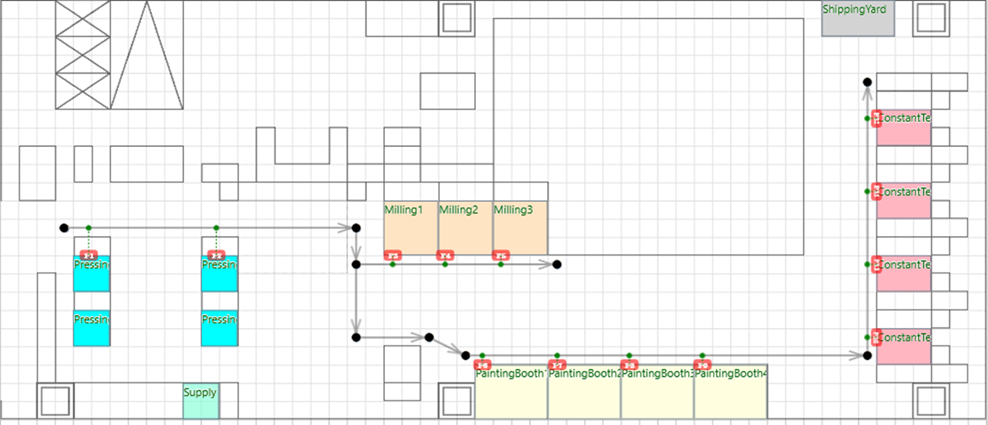
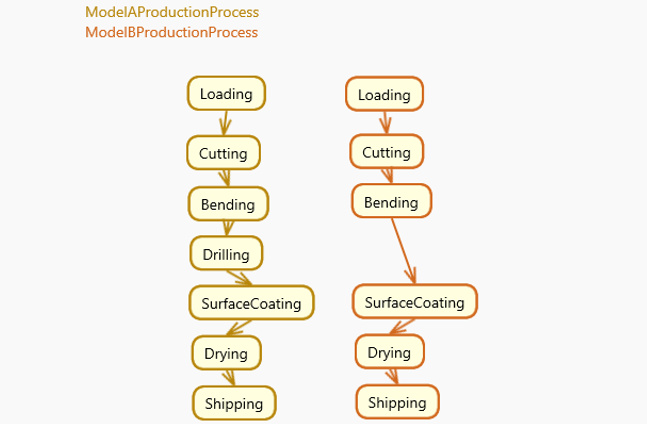
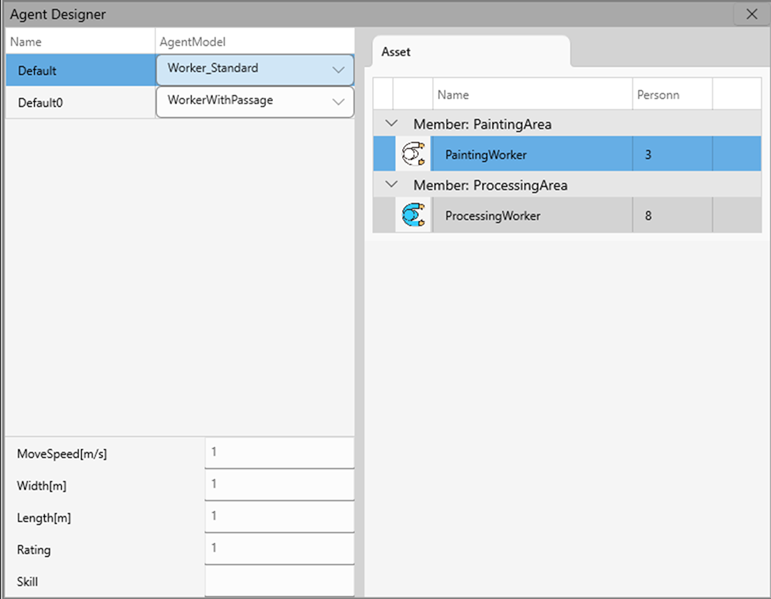
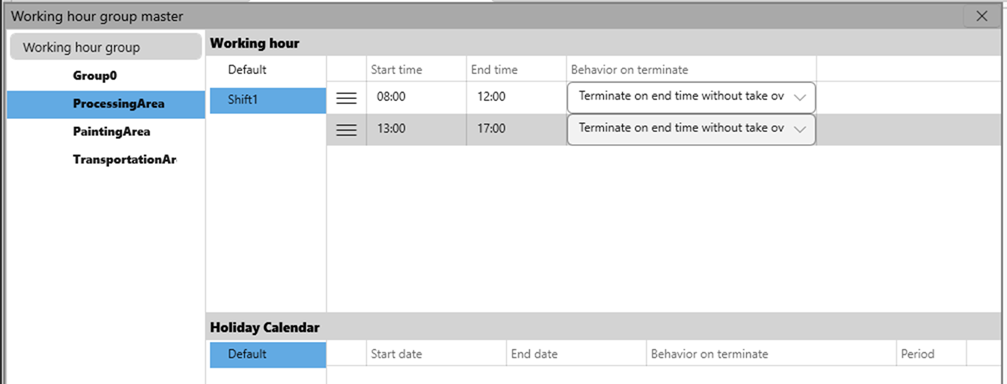
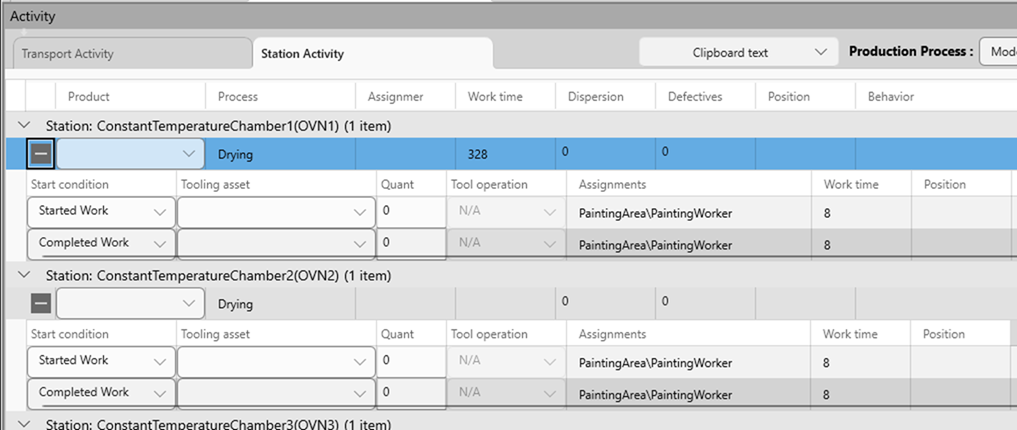
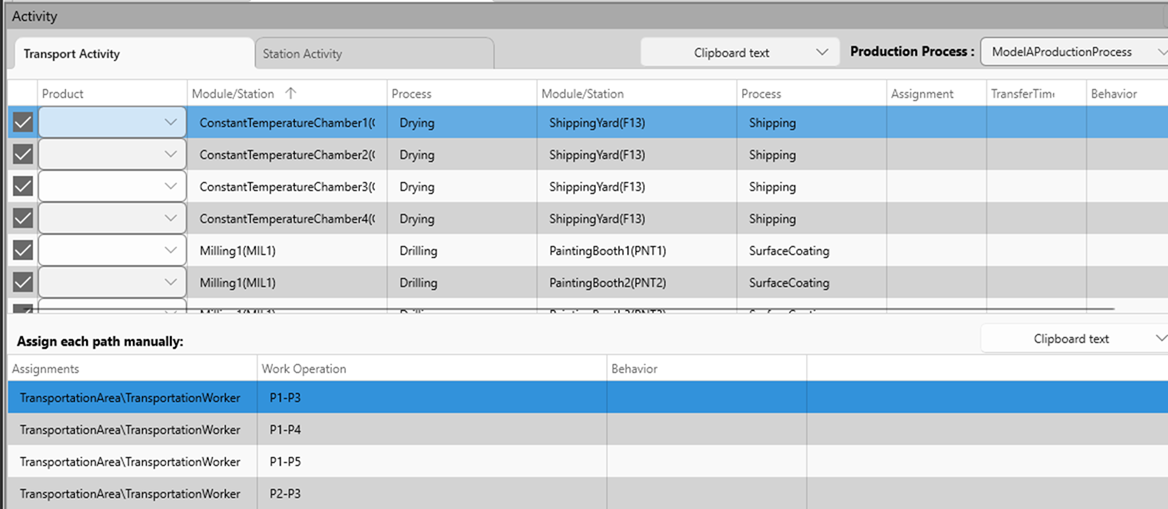
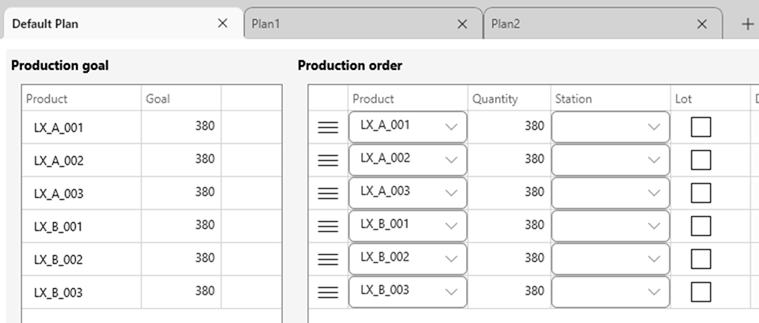

This modeling was created using GD.findi MS.
It is a no-code production simulator that performs production simulations in a digital virtual space, providing powerful support for line design and process design.
Output Report Example
■ Equipment Quantity Verification:
1. Method:
The bottleneck process (constant-temperature oven) was fixed at four units, and the required number of other machines was verified.
The simulation model was initially created with a larger number of machines, and then the number was gradually reduced for verification.
2. Result:
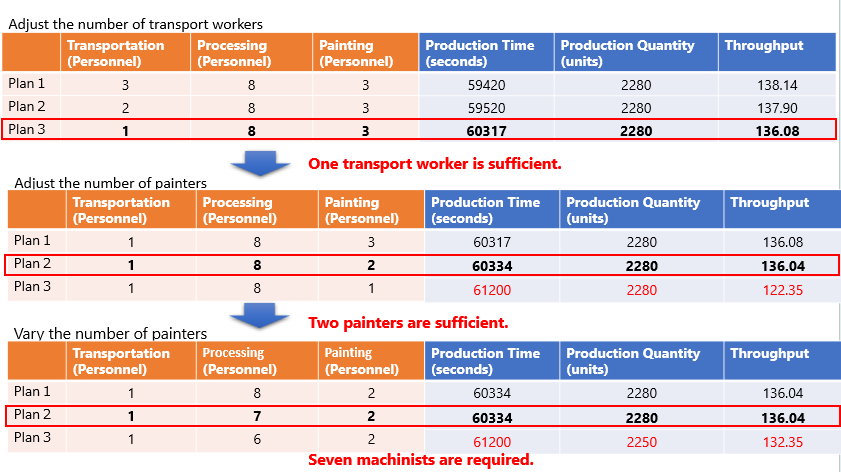
■Workforce Verification:
1. Verification Method
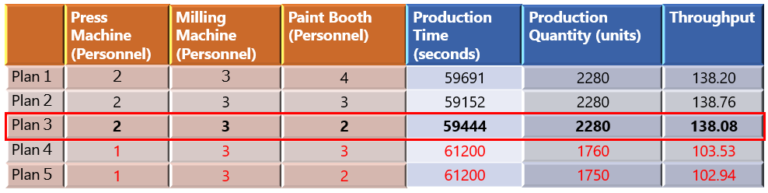
For this production plan, we employed Scenario 2, which represents an average production load. We initially created a simulation model using a larger workforce and then gradually reduced the number of workers to conduct the verification.
Note that even if production targets were met with a certain number of workers, if any worker’s utilization rate reached 95% (indicating no margin), we considered that worker to be insufficient.
2. Verification Results
3. Conclusion
For the assumed average production load and the selected equipment plan, the recommended allocation is:
7 workers in the processing area
2 workers in the painting area
1 worker in the transportation area